
Latest News

Expecting? Prepare for the unexpected when you add a baby to the family
November 13, 2024 / Insight from Eli Der, Wealth Advisor
Preparing for the arrival of a new baby involves more than just setting up a nursery, it also entails significant, long term financial responsibilities. With careful planning and budgeting you can ensure you’re financially prepared for this new chapter, covering both your expenses and those of your baby.
Past News
Planning to Exit Your Business
August 13, 2024 / Insight from Jim Watt, Senior Wealth Advisor
Entering this multi-year process can be daunting, challenging, complex, and stressful. Given the weight of the effort, some owners leave the important considerations for later, and those delays can reduce the chances of getting the best price and making the best plan for you and your business.
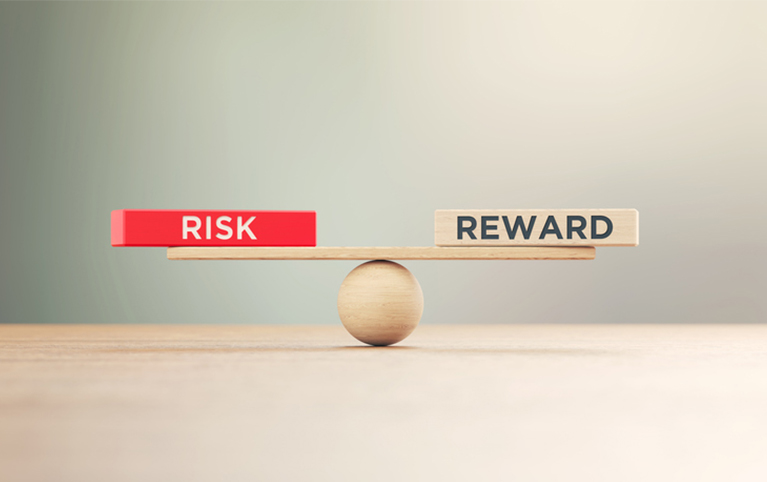
Navigating Risk and Reward: Understanding Your Investment Objectives
April 10, 2024 / Insight from Jim Watt, Senior Wealth Advisor
Investing can be a complicated journey, filled with opportunities for growth and financial freedom. However, it's not without its challenges. One of the most crucial aspects of successful investing is understanding your risk tolerance and aligning your investment objectives accordingly. This blog gets into some of the nuance around understanding risk tolerance and getting comfortable with market volatility.

Maximizing Wealth Beyond the Portfolio: Diversification in Financial Tools for Retirement
March 11, 2024 / Insight from Elena Babin, Senior Advisor in Financial Planning & Business Development
One of the things I often see when working with people approaching retirement age is a lack of diversification in the tools they use to build their wealth. In this context, when I say diversification, I don’t mean a diversified portfolio of investments, but rather a diverse set of tools for investing.

Philanthropy is about more than opening our wallets: Making an impact
February 20, 2024 / Insight from J. Angus Watt, Senior Wealth Advisor
Philanthropy isn't just about opening our wallets. It's about opening our hearts and minds to the needs of others and finding ways to make a real impact. it's crucial to ensure that your philanthropic investments are strategically directed. Deliberate and thoughtful philanthropy can yield the maximum impact. Here are four strategies to assist you in developing effective approaches to enhance the outcomes of your charitable initiatives.

The Money Talk: Teaching Kids Financial Responsibility
November 27, 2023 / Insight from Jane Alm, Senior Wealth Advisor
As parents, one of the most valuable lessons we can teach our kids is the value of money and the skills to be financially responsible. November is financial literacy month, which is the perfect time to introduce the importance of the ‘money talk’ and start your kids on the path to financial literacy. Here are some ideas on ways to get started.

Following the Exit Signs to New Horizons: Selling or Transitioning your Business
October 23, 2023 / Insight from Elena Babin, Senior Advisor in Financial Planning & Business Development
The process of exiting a business is filled with emotions, financial implications, and potential pitfalls. It can be a rollercoaster and a whole new learning journey for any entrepreneur. Seeking out expertise from a team of professionals, like those in our team at the Angus Watt Advisory Group, is one of the best ways to ensure a seamless transition.

Trust Companies – what are they and why consider them
July 17, 2023 / Insight from Jan Frederickson, CFP®, Senior Wealth Advisor
In the March 2023 insight from Jane Alm that talked about testamentary trusts, there was information about appointing a trustee, and one option was “a trust company…such as National Bank Trust”. This month, we will look at what a trust company is and what it does, and in what circumstances it might be an appropriate part of your financial and estate planning.

Protecting personal information – Be the CEO of your identity
June 16, 2023 / Insight from Angus Watt, Senior Wealth Advisor
Your date of birth, address, legal name, bank account information, and Social Insurance Number are key targets for identity thieves. You need to be the CEO of your identity.
Economic Impact
In order to help keep you informed and stimulate your thinking with regards to the current financial context, Stéfane Marion and Denis Girouard take a look at economic news and share their perspectives via our monthly informative videos.
July 15, 2026
Hello everyone, we are Wednesday, July 15th, 2026. Stéfane, a pleasure to be here with you again today. So, tell me, are the markets running out of speed?
Ah, they seem to be. Last time we saw a new record high on global equities, Nancy, it was the beginning of June. Notice that, you know, at the beginning of the Strait of Hormuz intervention, we had a correction, a big rebound stalling. And I think there's some geopolitics undermining the markets at this point in time.
I think so. So, you know, probably has an impact on the oil price for sure.
So, it coincides with renewed upward pressure on oil. Notice, Nancy, that we're still very far from the levels that exceeded $100, but it's.
Going up.
It's quite the rebound in recent weeks with renewed tensions.
And of course, that's mostly related to the Strait of Hormuz.
So, doesn't matter what politicians say. Politicians say, open or not open, traffic says it's not open. So, if you look at the underlying data, you can explain what's happening on the oil prices via traffic in the Strait of Hormuz, which is not reopened. So even though we put it, is it open? That is the question or not, it's not reopened at this point in time, hence the pressure on oil prices.
And it also has an impact because there is limited availability of various products, therefore.
So, there's something important to note. So, there's the Strait of Hormuz, but there's also a war elsewhere in the world. And what's happening in Europe where you're seeing destruction of refineries, particularly in Russia, which accounts for 11% of diesel sales around the world. You're seeing that refining, the cost of refining oil is surging because there's less refined capacity at refinery levels. So, crack spreads, which is one way to look at the price of refined products if you want, actually exceeds what you saw in 2022 that started the beginning of the war in Ukraine when crude oil was much higher. So what that means, Nancy, at the end of the day is like the economy works on refined products and they're up significantly, whether it's gasoline, diesel, diesel, and it shows up in a global supply chain. So yes, crude prices have rebounded. They're still below where they were before, but gasoline and diesel might hit new all-time highs in the coming week.
Yeah. And that's what consumers feel when they go to the pump, right?
Yeah. And remember, Russia actually said that they were restricting exports of diesel for the next month. And if there's more refinery capacity that's destroyed, probably that will last longer. So, hence the impact on global transportation costs.
And it will take time before everything goes back to normal, right?
So, politicians say something, betting markets say something else. So according to betting markets, you're not gonna reopen by the end of July, 2% probability, end of August 13%, end of September 27%. We're below 50% until the end of the year. Nancy, what that means is that you're going to continue to impact the global supply chain. So, I know U.S. inflation was weaker than expected this month but be prepared for potential upside surprise.
And obviously, let's say it opens December 31st. The next day, everything will not be back to normal. We felt that during the pandemic, it took months before things.
You have to replenish inventories, yes, you're right. So, probably the key story here is to say global supply chains, you know, the pressures on global supply chains are the most acute we've seen since the COVID recession. Historically, that's accompanied with positive or if you want negative surprise in the sense that inflation is higher than expected. So, this is why we're still not out of the woods. So, coming back to your first question, are the markets running out of steam? Well, the markets are looking at this– How do we assess the impact on the global economy and earnings in this situation?
And even so, since the beginning of this conversation, we've had, you know, geopolitical not so good news, not dramatic, but not so good. But then again, markets expectations are surprisingly high.
So, this does not necessarily show up in terms of earnings expectation because right now, as we speak, the expectation is that virtually every large region of the world will deliver more than 20% earnings per share growth so profitability will increase by 20%. It's you know, listen, it's possible. I just want to say these expectations are quite ambitious if you have more pressure on the supply chain in the coming weeks.
And what's surprising is your graph is that there's no negative, there's no one single digit.
No, no double digit, minimum double digit. So, as we said last month, the expectations are still the best earnings per share growth globally ever seen outside a recession recovery. So, market surprise for better news, not worse news, hence the need to watch what's happening on the geopolitical front in the coming weeks.
So, one good news we got this morning is Bank of Canada.
Well, if not moving interest rates is good news, yes, it is because we're keeping our.
But for our consumers it is.
Well, most of our, you're absolutely right, most of our clients would appreciate that and we remain in a jurisdiction where interest rates are lower than the rest of the world. So, that's good news. And the other good news, Nancy, is the Bank Canada, actually, they stayed on the sidelines, and they recognized that well we might see a better rebound in GDP than we expected in the second quarter, remember we had two negative quarters. Now we're set to rebound 2% in the second quarter. That's good news.
Yeah. And you have another one about employment.
Oh yeah, so GDP rebound is not very important for me if it's not accompanied by a jump in employment. And the good news is we seem to be confirming better news on GDP with the June employment data, particularly for people age 25 to 54 who are critical for the credit cycle, right? So, new all time high on employment for people 25 to 54. Now, Nancy, I know you're going to tell me "Yeah, but you told me population growth is negative this year", but permanent immigration is still up and it really has an impact on people 25 to 54. But yes, population will be down because many foreign students or temporary workers that tend to be younger will be negatively impacted. But that's good news for the credit cycle and for potential GDP rebound.
Good. So, you have another good for us about the production level that would be increasing in Canada.
So, people have been talking about trade diversification. It's hard to do in the short term if you don't tap into natural resources. And so oil production's on the rise in Canada and the expectation is they will continue to rise because there was a new pipeline announcement between Ottawa, Alberta, and British Columbia that seems to be inclined to provide more oil to the rest of the world. 90% currently goes to the U.S. and if you want diversification, you need a pipeline. So, from that standpoint, it's positive news in terms of diversification and note that from a trade balance perspective, it will help support the Canadian dollar. So again, there's upside potential here for oil production in Canada. And if you want to become an energy superpower, you know, it goes with that title. So again, I think that this is constructive from a trade diversification perspective, which the government actually is hoping for.
So, a lot of good news, Stéfane. So even though the microeconomic is very volatile, I mean, you've brought us a couple of very interesting news today. So, thank you for that.
Pleasure.
And for all of you, I hope that you will enjoy the summer and that you will take the time during your vacation to reflect on your situation and talk to your advisors. And we will see you again in August. So thank you. Thank you, Stéfane.
June 10, 2026
Welcome to Economic Impact. We are June 10th, 2026. Stéfane, so happy to be here with you again today.
Happy to be here with you.
So, I'm going to start hard. I'm going to ask you if we are in the most feared word for an economist. Are we in a recession?
That's a big word.
I know.
Yeah. I think it's important to demystify what's happening there. You know, the fact that people qualify recession as two consecutive quarters in that negative growth is not sufficient nowadays, not in a globalized economy. So, there were special factors that impacted Canadian GDP in the first quarter. But listen, I'm not here to be complacent, Nancy. Clearly, if you look at it from a year-to-year basis, you know, we're at 0, slightly negative. The U.S. is outperforming. Clearly it was not a great quarter, but it does not qualify as a recession.
So, that's a good news. You start with the scary graph, but it's a good news.
Yes. More importantly, what's happening for Q2 and the good news is that employment is rebounding and it's not just any type of jobs, it's full-time employment that is now back to an all time high. And the increase that we saw in May was the biggest increase in Canadian history outside the COVID episode. So, clearly.
Something.
It wasn't great in Q1.
Yeah.
But whatever it was, it wasn't a recession, but things looked much better because that will sustain consumption. Consumption was still positive in Q1, consumer spending. But with this type of job creation, it will remain resilient in the second quarter. So, I have the basically, the biggest component of GDP that is going to show a rebound in Q2. So that's good news.
So that's why Bank of Canada didn't move its rate this morning?
Yes because if they thought we were in a recession, let's be honest, they would have actually cut interest rates, not keep them where they are right now. They recognize that growth is underwhelming, but they will not also at the same time conclude that this is a recession. Not with what's happening on the job market.
That's good. And what about our GDP? How's it going?
Well, GDP, you mean the most important component after consumption.
Trade surplus.
The trade surplus. So, we spoke about it a few weeks ago as Canada normally benefits from higher energy prices. We have the confirmation for Q2, Nancy. New all-time record on net energy exports which brought the trade balance back from deficit into surplus. So, I have the two largest components of GDP in Q2 consumption that's doing better and the export sector. Now all we need is more business investment. We'll see what USMCA later this year, but I have a GDP rebound in the makings for Q2.
That's interesting because we had one scary graph, two good news. But then again, our loonie is the lowest that we've seen in so many times.
Well, it's.
And people are gonna take their summer vacation now, right?
Yeah, well, let's wait a few months. I don't think there's much more downside to the Canadian dollar at this point in time unless USMCA is completely derailed. But the reality is we have the worst performing reserve currency over the past month. So, we're actually back to where we were at the worst of the Hormuz.
Beginning of.
Beginning of the intervention in the Strait of Hormuz. So, this is not good news. This is frustrating for me as an economist. But we had predicted that Q2 might be softer and.
It shouldn't go down, right?
We're happy to stabilize it at this level here unless, as I say, there's a derailment in USMCA negotiations.
Absolutely. And what about gold? I recall one of our first calls of the year, we had called it for $5000 and it did surpass.
So yes, it did. And the reason we're here, Nancy, is because gold prices are not doing very well right now. We started the year at more than $5200. We're back down and we had said that gold will be in a $4000 to $6000 range, probably going to retest 4000, hence serve you that we were more cautious on the Canadian dollar. So, things are unfolding pretty much according to the scenario. And yes, you're absolutely right. What's weighing on the loonie right now is the performance of gold.
And when I was in college and university, I remember that we used to call our Canadian dollar the petro dollar, but it seems that it's not working that way anymore.
Well, we're not a petro dollar right now. We're more of a golden dollar because the correlation, again, intermarket correlations are not stable through time. So, you're absolutely right. Generally speaking, we should be positively correlated with oil, but now it's an inverted correlation. So, what is really, you know, driving the Canadian dollar is the price of bullion followed by the, you know, the interest rate differential with the U.S. But the price of bullion has been very, very important in determining what’s happening with the Canadian dollar. Oil might, you know, become positive in the months ahead. And I mean this can be temporary, but what's happening on gold has more importance on the Canadian dollar than it's ever had in the past. And that speaks to the geopolitical environment, right?
Of course, things are different, as we could say. And what about energy? Electricity?
This is so important. I mean, the new electricity strategy announced last month, and we spoke to this at the beginning of year. It doesn't matter. You might have all these nice plans for the Canadian economy down the road, reindustrialization, etcetera, but if I don't have access to electricity.
You can't, you can't do anything.
I can't execute. You're absolutely right. So, what happened in May, so yes, Ottawa signed a memorandum of understanding. They actually signed it off with Alberta and people are saying, well, that's just to please Alberta. It was more than that because by tabling the new electricity strategy, which aims to double electricity grid by 2050, they made natural gas or transition fuel. And that was not just to please Alberta, it was critical for the Ontario's electricity grid, which now relies more on natural gas than hydro to generate the electricity. And there's still capacity here on natural gas. So, it's just, we're not abandoning.
No, it's a transition, right?
The transition has been lengthened and that's critical because there's no way that we can participate in the AI revolution if we can't build data centres, if we can't reindustrialize. And the spare capacity that we have on the grid in Canada comes from natural gas. So, we need to be pragmatic. And for the first time in a decade, Ottawa became pragmatic, realizing that our growth potential was being seriously impaired if we did not declare natural gas a transition fuel.
So, that's another good news. So, it should translate in good markets, shouldn't it?
Well, it's— to have been good markets globally so far despite the geopolitical stress. So, but keep in mind this is quarter to date in Q2 and this is as of June 9th, last night, so basically.
39 days.
39 days and you're already up 23% for, you know, emerging markets, the S&P 13%, you know, the S&P TSX. These are performances that you see over the entire year. So, all I'm here to say, Nancy, yes, I respect what's happening in markets, but please do not necessarily expect a repeat performance in Q3 and Q4. A lot of good news is currently embedded in profit expectations and market performance.
Okay. And what about the impact of the Strait of Hormuz still being closed?
So, hence the challenge of delivering strong markets like we've had so far in Q2. Inflation. It doesn't work when you have too much inflation, which might prod the Central Bank. So in Canada, into action. So, in Canada, we know the Central Bank's on the sideline. In the U.S. the issue that we have right now is that, you know, until recently, people are saying, "Well, the commodities' in short supply, is anything related to AI, nothing's happening elsewhere that would lead us to believe that inflation is going to be an issue in the next few months." But look what's happening in recent months, like for three months now, resins' an issue, aluminum.
Steel.
Steel, a first month now.
Yeah.
So basically, the longer you shut down the Strait of Hormuz, the more impacts you're gonna see on the supply chain. And they're becoming much more apparent in the U.S., hence the inflation numbers that were much stronger than expected this morning.
Absolutely. And it's affecting definitely the supply chain.
To put things in perspective, yes. And if you want to look how bad it is right now, it's the most stressed supply chain in the U.S. that we've seen since the COVID recession. So, it is a big deal. And you know what happened here, inflation actually surged at a higher level than expected. So, keep this in mind. Inflation is not, we're not out of the woods on inflation. So, the Central Bank might surprise us with a rate hike. So, that's the reason why markets will have to tread more carefully in the months ahead.
Okay. And what about the closing of the gap with China? I know you love to have a slide on China so.
Yeah, well, it's the AI stuff. So, there's a lot of excitement about, you know, high profile IPOs that are coming into the market.
This Friday.
Related to AI. And I just want to put things in perspective here, Nancy. I understand it's an industrial revolution. I get that. But unlike 2000, the U.S. doesn't have the monopoly on the new technology. Let me explain. Back in 2023, the U.S. had a comfortable lead about AI model performance. But China is using an open-source model to try to catch up to the U.S. and they've been able to close the gap. More importantly, also, or also China is able to offer these AI models at one seventh of the cost that you have to pay for the U.S. So, I'm just saying here.
There's competition.
There's a competitive environment so don't believe that the Americans, you know, dominate the way they did back in 2000. There are serious considerations to be made here about what's the profit outlook of these U.S. corporations if they have a competitor that's just that good and much cheaper to deploy. So, that will be the important test for markets in the weeks ahead as whether these profit expectations are realistic or not.
And that's why, I mean, our listeners need to talk to their advisors and read the research before deciding to invest because yes, you could be trying to buy the IPO on Friday, but there's also other ways to invest in this trend, in this AI movement without having to actually buy a certain stock.
You're so right. What we do know with conviction is the AI revolution is very energy intensive.
Yes.
As it turns out, there's a lot of energy in Canada and we're actually allowed to deploy it now under the new electricity strategy. So, there's all a bunch of ways that you can play it directly, buying these companies directly, or indirectly. So yes, I do believe it's an AI revolution. But, you know, sometimes, you know, there can be some fraud and yes, there's profit expectations down the road, but we have to play it according to our risk tolerance at this point in time.
Definitely. So, thank you very much Stéfane. I again invite you to talk to your advisors, read the research to make sure that whatever you choose in terms of segments does fit your risk profile. It was amazing doing this little mission today, you and I, and I really appreciate doing this. If you are going on vacation, please take the time to rest and I'll see you in a month.
Thank you.
Investing Guide

This reference guide contains a wealth of practical information and tools to help you plan your projects. Download it to your desktop to enjoy all the features.
Women’s Finances

Take action for women’s financial future today
Ladies, improve your financial well-being with our Invest in you series. What’s on the menu? Articles and lectures that cover a wealth of important concepts - beyond money - to get you through every event in your life with confidence.
News archive
First Home Savings Account – a new way to become a homeowner
Seeing the trees for the forest – developing your financial plan
The Payoff of Patience and Discipline: Learning to Love Compound Interest
RESPs – a smart investment for your child’s education
A Rethink on Government Retirement Income – CPP

